Choosing materials for an interior project can become challenging when multiple suppliers offer similar products. Price, appearance, thickness, finishes, and delivery times may vary, but these factors do not always provide enough information to determine which supplier offers the best overall value.
For projects involving durable decorative surfaces, buyers should take a broader approach. Product quality, manufacturing consistency, technical support, customization, and long-term reliability can all affect the final result.
Start With a Clear Specification
The first step in comparing suppliers is creating a clear material specification.
A project specification might include:
- Required dimensions
- Thickness
- Surface finish
- Color or pattern
- Intended application
- Performance requirements
- Quantity
- Delivery schedule
Without these details, supplier quotations may not be directly comparable.
One supplier might quote a different thickness or finish from another, creating an apparent price difference that does not represent equivalent products.
See also: Insurance Fundamentals: A Starting Point for Malaysian Consumers
Understanding High-Pressure Laminate
High-pressure laminate is commonly used in interior applications because it combines decorative appearance with practical performance.
The material can be manufactured in many colors, patterns, and textures. Depending on the product specification, it may be used on furniture, work surfaces, cabinetry, doors, wall panels, and other areas.
Its versatility makes it attractive to both residential and commercial designers.
However, the specific laminate should always be selected according to the conditions of the intended application.
Comparing Product Quality
Two products can look almost identical while having different performance characteristics.
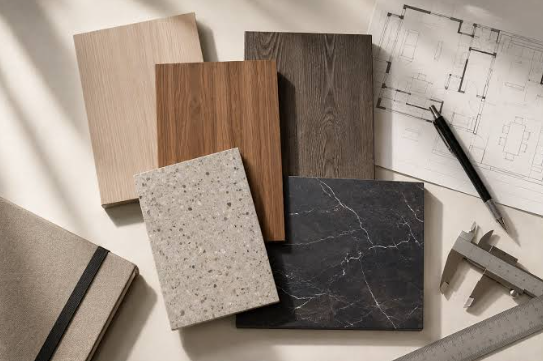
Buyers should examine technical documentation and, where possible, request samples. Samples allow teams to assess color, texture, surface finish, thickness, and general quality.
For larger projects, testing may also be appropriate.
Quality should be evaluated consistently across suppliers so that purchasing decisions are based on comparable information.
Production Consistency
Consistency is particularly important when materials will be used across a large project.
Variations in color or surface texture between production batches can create visible differences when panels are installed next to one another.
Reliable manufacturers normally use controlled production and inspection processes to minimize variation.
Buyers should ask about quality-control procedures and batch consistency when planning significant orders.
Customization Capabilities
Some projects require standard materials, while others need customized dimensions, colors, finishes, or packaging.
A supplier’s ability to accommodate customization can become important when the project involves a unique design.
However, customized products may require longer production schedules. Buyers should therefore confirm lead times before finalizing the project plan.
Communication and Technical Support
Good communication can prevent expensive misunderstandings.
Suppliers should provide clear answers about specifications, application limitations, installation recommendations, and maintenance.
Technical support becomes especially useful when the material is being used in an unusual environment or when the project involves multiple surface requirements.
A supplier that responds clearly and consistently can provide value beyond the material itself.
Evaluating Manufacturing Experience
Manufacturing experience can provide useful insight into a supplier’s ability to maintain consistent production.
Businesses can evaluate product range, quality systems, production capacity, international experience, and technical documentation.
A supplier with experience in comparable applications may also be better positioned to identify potential issues before production begins.
Cost Versus Overall Value
Price is naturally important, but it should not be the only factor.
A cheaper material may require more frequent replacement, create installation problems, or provide fewer customization options.
The total cost should consider material price, shipping, installation, maintenance, waste, and expected service life.
This approach provides a more realistic comparison between suppliers.
Project Planning
Once a supplier has been selected, project teams should confirm all specifications in writing.
Color references, dimensions, quantities, packaging, delivery dates, and inspection requirements should be documented.
Clear documentation reduces confusion and provides a reference if questions arise later.
FAQs
What is the first step when comparing surface suppliers?
Create a detailed specification so that all suppliers are quoting comparable products.
Should buyers request samples?
Yes. Physical samples can help verify color, texture, finish, and general material quality before a large order.
Is the lowest price the best option?
Not necessarily. Long-term value also depends on quality, consistency, service, delivery, and performance.
Conclusion
Supplier comparison should involve more than high pressure laminate manufacturers checking prices. A successful purchasing decision considers product specifications, quality consistency, customization, technical support, manufacturing capability, and long-term value.
By developing clear requirements and evaluating suppliers systematically, businesses can make more confident decisions and reduce the risk of material-related problems during construction or manufacturing.